


2020-11-20
|The NETWORK
|Source: www.seattletimes.com
Paul Roberts
Gov. Jay Inslee stopped short of announcing new stay-at-home orders in his speech Thursday but many businesses and trade groups are already bracing for a new round of potentially costly restrictions as early as next week.
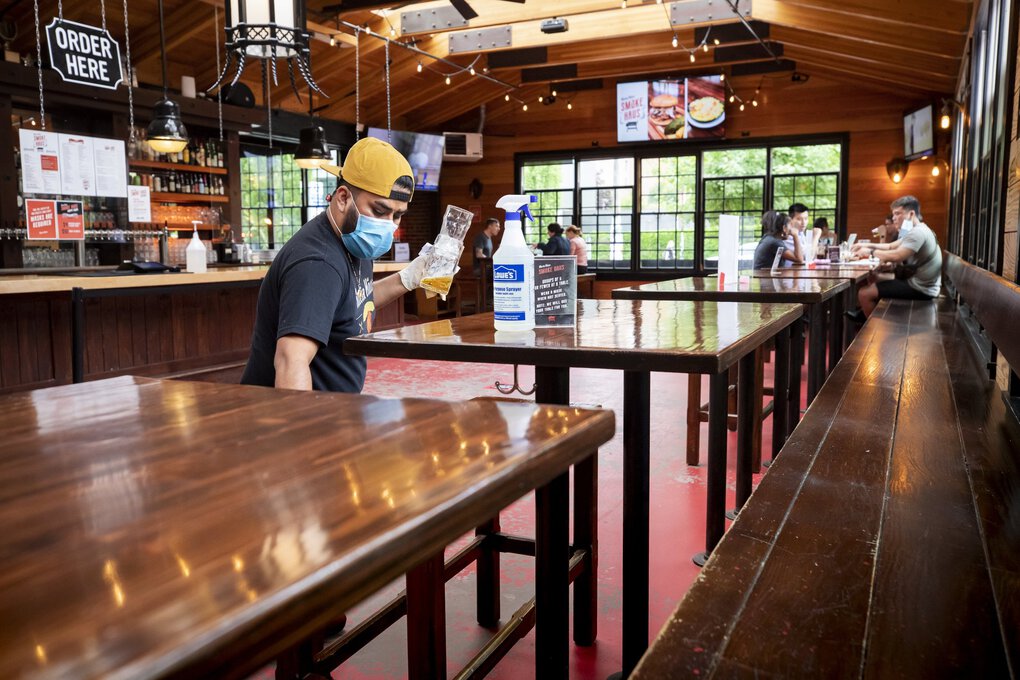
“I can’t imagine that we’re not going to have more restrictions coming up, with the number of positive cases surging,” said Seattle restaurateur James Weimann, co-owner of Rhein Haus and seven other Seattle-area eateries.
While Weimann thinks such restrictions may be necessary, he fears what it’s going to mean for a company that has already laid off nearly two-thirds of its staff and is currently running at 30% of its 2019 revenues. “Right now, we’re looking at a really potentially devastating winter,” Weimann added.
He could be speaking for much of Washington’s business community at a moment when the 9-month-old pandemic appears to be moving into a more intense and uncertain phase.
Although new restrictions have been widely expected as coronavirus cases have soared, there is little consensus among businesses, trade groups or economists over what the governor might propose.
So far, Inslee’s announcements have laid out only voluntary measures related to private gatherings and out-of-state travel.
But the governor’s speech Thursday left open the possibility of “further measures” that “will affect what we do outside of the home”— language widely read as signaling some kind of renewed restrictions.
“That’s been the governor’s style — to kind of set it up,” said Tom Norwalk, president & CEO of Visit Seattle, the trade group representing the region’s already battered tourism industry. What’s unclear, Norwalk said, is “exactly what next steps might be in terms of severity.”
That has only added to an atmosphere of uncertainty hovering over the business community. On top of questions about rising coronavirus case rates, businesses also don’t know when, or if, Congress will extend the pandemic relief measures, such as the Paycheck Protection loans, that allowed many businesses to survive since the start of the pandemic.
Despite those unknowns many businesses and trade groups are already laying out grim scenarios, especially in public-facing sectors such as food service, tourism and accommodation. These businesses have experienced a disproportionate share of the layoffs and losses related to COVID-19 — and may bear the brunt of any new state and local restrictions.
Read the original story here.