


2021-02-01
|The NETWORK
|Source: www.iol.co.za
Robin-Lee Francke
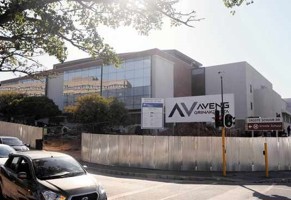
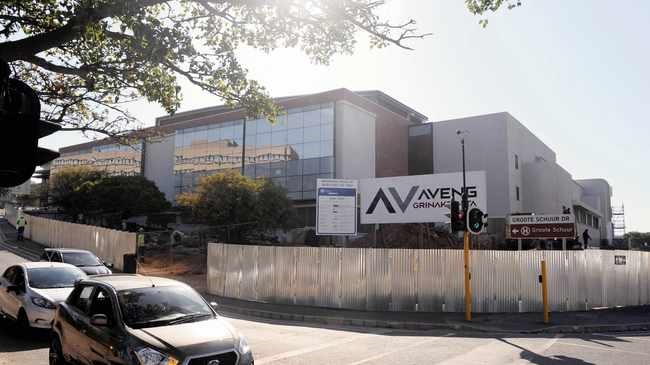
Cape Town — A new forensic pathology institute in Observatory, Cape Town, is set to open its doors in April, MEC for Transport and Public Works Bonginkosi Madikizela announced on Monday.
Madikizela visited the facility to check on its progress as the site nears completion.
Construction of the R287 million facility started in April 2017 and initially was set to be completed by March 2019.
“Eleven thousand decedents are presented for examination at the Western Cape Forensic Pathology Services facilities per annum and 70% of the cases are presented in the Cape metro region.
“These numbers have increased significantly as a result of deaths due to the coronavirus.
“The new Observatory Forensic Pathology Institute that is being built by my department, the Western Cape Department of Transport and Public Works (DTPW), will add significant capacity to our current pathology services.
“The purpose of my visit today is to assess progress towards completion and the state of readiness of the project and give assurance that all required systems are in place,” Madikizela said.
He said while the facility had aimed to open its doors in March 2019, there had been several delays as the DPTW was issued with changes to the scope of work, and construction was halted due to the hard lockdown period.
Progress was also subjected to numerous delays in the completion of the permanent electrical, water and civils connections.
Madikizela said these challenges were beyond their control but that he was giving this project his ongoing attention to ensure it is completed according to its revised schedule.
He said, once completed, the facility will replace the forensic pathology facility located in Salt River.
“The three-storey facility will enable better integration of the work of provincial Forensic Pathology Services and the National Health Laboratory Service, coupled with resources to support the University of Cape Town’s academic training in the field.
“The design and construction of the facility is of a highly complex nature and takes into consideration processes aimed at extracting, analysing and preserving the integrity of evidence for use within the criminal justice system if required,” Madikizela said.
The facility will incorporate functions such as parking on the lower ground floor, service/plant room spaces and a component of the noxious wet lab spaces.
The upper-ground floor will accommodate the main entrance off Falmouth Road, main autopsy and body refrigeration functions, receiving and dispatching of bodies as well as public waiting and body-viewing spaces.
The first floor will accommodate laboratories, offices and teaching spaces.
The roof plant void and slab will be accommodate additional service/plant room services.
Public parking will be located across Falmouth Street.
Madikizela said core facilities that would be incorporated include 26 autopsy tables; four dissection suites with six tables each as well as teaching and training dissection suites; 360 refrigerated-body spaces; 180 admission fridges and 180 dispatch fridges.
The building will be able to accommodate 100 visitors, 10 waiting undertakers and 20 students at a time.
“It is important to note that this project made use of labour-intensive methods that have provided and continue to provide a number of short-term work opportunities and skills training for local citizens.
“We are very proud to be building a lab that is of the highest standard, further boosting the reputation of the Western Cape as a centre of excellence for medical and related services,” Madikizela added.
Read the original story here.